The End of the Watch: Military Retirement

The End of the Watch: Military Retirement

[Chapter One]

At the age of 17, I congratulated my boyfriend on his acceptance to the United States Naval Academy. “When do you leave?” I asked. And the clock began to tick, a figurative wristwatch attaching itself to me. 

Years later, our wedded bliss begins with the cadence of time…

How many months until you report to flight school? 

How many months before you get your aviator wings?

How long will we live here?

We constantly look at the calendar, the time, the projection of years.

When do you leave for deployment?

How long will you be gone?

When do you go on the next detachment?

When will your new orders come out?

But it doesn’t seem strange, this ever-present, incessant ticking, it’s just our life. In our military community, conversations often begin with “How long have you been stationed here? When will you move again?” Our lives model a revolving door, watching the hands of time go around and around as our spouses take turns leaving, deploying, “standing the watch”. And we spouses stand the watch, too, proudly waiting for them to come home.

As the years go by, the questions start to change…

How many more years does he owe?

Is this his last tour?

When can he retire?

And then I feel the lurch of the clock, the hiccup in the wheel of time. Thirty years have passed since that teenager asked the first question and the time begins to slow down. I still hear the ticking, but the scenes play in slow motion as our brains race to capture every moment and every event before the sand runs out.

Statements burst forth, paperwork starts to be processed and “How many days until retirement?” becomes the last marker of Navy time. Invitations fly through the mail, family and friends returning with them like boomerangs. One final time, my husband dons his flight gear and soars into the clouds, taxiing through a rainbow of water upon his return to earth. Champagne is poured and the ceremony planned. 

The calendar flips and the day of his retirement dawns. Speeches resound, flags are lovingly handled, a friend harnesses his deep voice and bellows throughout the hangar:

“For twenty-six years

This sailor has stood the watch

While some of us were in our bunks at night

This sailor stood the watch

While some of us were in school learning our trade

This shipmate stood the watch

Yes.. even before some of us were born into this world

This shipmate stood the watch

In those years when the storm clouds of war were seen brewing on the horizon of history

This shipmate stood the watch

Many times he would cast an eye ashore and see his family standing there

Needing his guidance and help

Needing that hand to hold during those hard times

But he still stood the watch

He stood the watch for twenty-six years

He stood the watch so that we, our families and our fellow countrymen could sleep soundly in safety,

Each and every night

Knowing that a sailor stood the watch

Today we are here to say
‘Shipmate… the watch stands relieved’

Relieved by those You have trained, Guided, and Led

Shipmate, you stand relieved.. we have the watch.”

I look at my husband on stage standing proudly in his uniform, my forehead straining against the emotion inside me. Where did the time go?? Memories flood my mind.

But then I am walking towards the stage, taking his arm, listening for the bells and “departing the ship” for the last time. The jets roar overhead as the end of the red carpet draws near, the final steps of our Navy journey. We stop at the finish line and cross over it together as his watch stands relieved. And so does mine.

Our family huddles in the corner, a core memory made. But then we pull away, the world shifts and my body registers a change. I feel my wristband loosen and hear my own watch clamoring to the floor, the time frozen in place. My brain searches for the rhythm that has always drummed in the background of my thoughts, but it’s no longer there. The ticking has stopped. 

And for the first time in my adult life…all I hear is a beautiful silence.

[Cue Chapter Two]

–Subscribe via email for future blog posts–

A Carrier Deployment is… so many things.

A Carrier Deployment is… so many things.

It’s spending six months counting down to Departure-Day. 

It’s saying hello and goodbye over and over and “Please don’t send me photos of your steak dinner in Fallon.”

It’s the pit in your stomach as the green sea bags appear in your bedroom and the packing begins and “Why do they still smell like jet fuel??”

It’s the last-minute paperwork, house chores, oil changes and hard conversations.

It’s the Last Supper and “Anything you want to eat before you go?”

It’s going to bed that night with your head spinning, the inevitable happening tomorrow and wondering how on earth you will handle it. 

It’s the next morning, the stomach hurting, the knees starting to shake as you drive to the base.

It’s pulling into the hangar parking lot and thinking “Holy crap, this is actually happening!!”

It’s a final hug, the tears coming, the heartbreak of watching the kids say goodbye. 

It’s him walking into the hangar and you driving away, a silent prayer for safety on your lips. 

It’s questioning all your life choices and “Why on earth are we still doing this???”

The next day…it’s the new normal as your family marches onward.

It’s doing a countdown paper chain but then taking it down because “This is waaaaay too long” and unhealthy for your mental state.

It’s having the hard conversations with your kids, trying to squelch their anxiety about Dad being gone, assuring them of his safety.

It’s also announcing “There’s a new sheriff in town so listen up…”

It’s the passing of weeks and months and new-found independence.

It’s learning how to use a lawn mower, cleaning out the rain gutters and “Let me quickly check the tire pressure.”

It’s paying all the bills, scheduling all the repairs and unclogging a sink.

It’s buying frivolous things on Amazon because mail is fun and you need endorphins.

It’s clean towels pushed over to his side of the bed and sleeping multiple nights next to your Laundry Husband. 

It’s watching whatever you want on the television because the remote heeds only to your will and “So what if I want to watch Twilight??”

It’s the occasional phone call from the ship and broken phone conversations of “What-uh-ih-on-ei?” 

It’s sitting alone in church.

It’s an entire soccer season with just you on the sidelines.

It’s hard days solo-parenting, wondering how you can possibly give your kids all the care they need. 

It’s balancing Fun-Mom with I’m-The-Only-One-Around-To-Discipline-You Mom

It’s Mary Poppins in the morning and Miss Hannigan at night.

It’s precious nights of snuggling on the couch, reading at bedtime and watching Disney movies.

It’s “What do you want for dinner- scrambled eggs or meatballs?”

It’s tears in your eyes as you proudly watch your resilient kids doing a HARD THING.

It’s Spring and Summer passing without him here.

It’s missing his presence and his joy and all the traits that made you want to be with him in the first place. 

It’s watching the front lawn slowly die but “I’m trying to keep children alive so someone else can fix that later.” 

It’s seeking out time with other military spouses because “You guys are the only ones who get this!!”

It’s hearing the national anthem and feeling more patriotic than usual.

It’s flipping the calendar and saying “Kids!! He’s home NEXT month!!”

It’s the Navy saying “Just kidding! We changed schedules! Add thirty more days!” 

It’s asking and checking and finally putting up the paper chain for the final weeks.

It’s only two more weeks of putting out the trash bins.

It’s “Hurry, kids, take out your junk from Dad’s car before he gets home!!”

It’s buying new makeup because you feel a little nervous.

It’s shopping for groceries and re-buying the foods that he enjoys.

It’s putting flags in the front yard, hanging up a welcome sign and shouting to the world that “WE HAVE DONE SOMETHING BIG HERE!!”

It’s waking up that morning with a burst of adrenaline. 

It’s driving to the base and thinking “It’s happening!!!”

It’s standing around the hangar, listening for timely updates, knowing you have only minutes left before the deployment is done. 

It’s watching all the families around you, honored to be in the company of such strong people.

It’s someone announcing “10 minutes out!!” and everyone hurrying outside to intently watch the horizon.

It’s someone shouting “They are coming! They are coming! Do you see them??”

It’s a slow-moving flock of jets, silently growing closer and closer. 

It’s the families jumping and cheering as the formation flies overhead and the deafening sound hits your ears. 

It’s tears in your eyes and relief in your shoulders, thinking “WE. DID. IT.”

It’s waiting around while the jets circle and land, one by one.

It’s the little kids saying “Why does this part take sooooo long??”

It’s the canopies opening and all the men and women climbing down from the jets and taking off their gear.

It’s the families waiting with anticipation, excitement crackling in the air. 

It’s the line of flight suits forming at the end of the tarmac, the palpable tension in the crowd as we are told to hold the line.

It’s them walking closer and closer and someone finally shouting “Run!!” and every kid racing like their lives depend on it, into the arms of their moms and dads. 

It’s hugging him and thinking “He’s here. He’s real. We are all together. Thank you, Jesus.”

It’s feeling like the world is suddenly righted and everything is going to be okay.

It’s shoulders down and then shoulders back and the hint of pride that says “I handled that LIKE A BOSS.”

It’s knowing that our nation called and we answered and gave it everything we had… and now it’s time to go home. ❤️

[“Are you safe to drive? It’s been months since you were in a car…are you sure I shouldn’t drive home? Move over…”]

Riding the Train of Resentment: a decision for military spouses

Riding the Train of Resentment: a decision for military spouses

To the Resentful Navy Spouse-

I see you online, commenting to other spouses about your gripes with Big Navy. I sense the acidic tone in your voice as you lament the pain of moving again and “putting [your spouse’s] career first”. I cringe at your words and feel a bit heartbroken for your state because I remember feeling that way, too. It’s hard. 

When I first married the Navy, oops, I mean my husband, we moved three times in those two years, effectively shredding my resume before the ink had a chance to dry. It hurt. Add in a junior naval aviator who mentioned to me at a dinner party that I shouldn’t complain about my career “because jet pilots spend their entire lives dreaming of their jobs and graphic designers do not” and I almost went to prison for first degree murder. 

Years later, I remember being a young mother with baby vomit pooled in the center of my bra looking at photos of my deployed husband’s port call in the tropics. Or when I saw a photo of his steak dinner in Key West while I was eating my toddler’s cold, leftover macaroni and cheese from a plastic Little Mermaid plate. “Must be nice to be on vacation…” I grumbled as I changed another diaper. Bitterness found me ready and willing to jump aboard. 

As many spouses of junior officers do, I rode that steam engine for a number of years until we decided together to stay in the Navy past my husband’s original commitment. We knew that we both had more to give our country so I disembarked from the Train of Resentment and proceeded on a new route with a new attitude. Travel photos ceased, my husband’s sea-pay was reclassified as “Babysitter Money” and prestigious Navy jobs were declined so our family could remain planted in the same soil for a while. Gratefulness found its way into my heart. 

And I hope it can find its way to your heart, too.

Hear me out on this. I know that this Navy life is hard and sometimes you just need to call up a good friend and commiserate for a little while. I frequently do this, even after twenty-five years. But if you are bogged down in daily resentment or bitterness, can I offer you some advice?

  1. This military journey works much better if you consider yourself part of a team, rather than being a bystander blindly following the whims of your spouse’s career. Because the Navy is so all-encompassing, you need to find a way to make it your own, too. Find your silver lining, your own purpose in it. How can you set goals as a couple to make this work for BOTH of you?
  2. Talk to your spouse and state explicitly what is gnawing at your peace. Is it the separation? The overwhelming task of single parenting? The shredding of your resume and lack of career advancements? The stupidly gorgeous photos blowing up your phone? Write it, share it, talk about it, over and over.
  3. If those conversations leave you at an impasse and you can’t see eye to eye, I highly recommend Militaryonesource.com for free personal and/or marital counseling. It’s one simple phone call. This is your marriage here; do not wait to seek professional help.
  4. MEANWHILE… I’ve said it before and I will say it again—–> do not blame your spouse when he/she is gone. YES, the schedule will make you insane but it isn’t your spouse’s fault. People in much higher pay grades control the movement of ships & aircrew and world events can alter the plan in a single day. Remember that this is the Navy, sailors deploy, and no amount of complaining or blaming will ever change that mission. (See A Letter to my Younger Self when my husband left for the ship when I had a toddler and the stomach flu. Fun times.) 
  5. Try, try, try to feel empathy for your spouse, rather than resentment. Can you put yourself in your spouse’s shoes and think about those stressful schedules and heartbreaking goodbyes? How would you react if you had to leave your children for six months? If you were locked in a giant metal container for months on end, with all your clothes and linens smelling of jet fuel, wouldn’t you enthusiastically jump at the chance for a gulp of fresh air on the beach? Give them some grace. If they decide to enjoy a pina colada on the beach, LET THEM. (Then go to Target and buy a pina colada mix for yourself.)
  6. If the bitterness persists and peace cannot be found… I’m going to say it…perhaps your time in the military is done. Twenty years of service is not for everyone and not required. It works wonderfully for some families but not well for others, so don’t force it. Serving five years, eight years, ten years is a noble act and our country is grateful, but it’s okay to choose a less intense environment and ride off into the Maverick sunset. The Navy is temporary but your marriage should be for the rest of your life. 

I truly believe that military service can offer your family the experience of a lifetime if your heart is open and your communication is strong. It can be a wonderfully rich journey if you choose an attitude of gratefulness…but only you can decide to do it. 

Wherever you land, know that you are SEEN and you are HEARD by so many of us out here. We get it. We understand the struggle. And we love pina coladas, too, so don’t be afraid to reach out when you need a listening ear, 

……………………………………………………………………………..

Subscribe for future posts from Messy Kitchen Ministry

Original photo by @felipepelaquim on Unsplash

Glittering Kindness: the way of the military spouse

Glittering Kindness: the way of the military spouse

There is something about the military moving process that makes me want to take a blow torch to all of my personal possessions. When two hundred boxes are casually dumped onto the ground like hotcakes I am tempted to recreate Burning Man and provide free fire and heat to our new neighbors. The entire process is massively overwhelming, especially when you are eight months pregnant, your husband is working and your other kid is lost somewhere in your hoarder’s den from Hades. 

It was at this precise moment of panic that my doorbell rang and my husband’s new boss’s wife greeted me on my front porch. Knowing the stress that accompanies a military move, she stopped by to say hello and give me a coffee cake! Say what?? GOD. BLESS. HER. I needed her smile and my baby needed that shot of sugar. (Thank you K.M!)

Weeks later she invited me to a Navy spouse group upon which the women surprised me with a baby shower. Women who had NEVER met me gave me a baby shower!! The gesture literally left me speechless and still makes me teary as I write this now. It was pure kindness on the part of these military spouses, going to the store and buying this “Kim” person some diapers for her baby. (Thank you, Argos!)

And yet, those were not the only times I benefited from the kindness of milspouses. 

They came to my house at 3:00am to watch my kids when I went into labor and needed to rush to the hospital. (Thank you L.D!)

They raised money to support deployment activities and then turned around and donated it to cancer research in honor of my family member who had recently died. (Thank you, Tophatters!)

Right after moving to Europe, they knew me for a solid five minutes before inviting me to spend three hours at their house washing laundry. (Thank you, D.M!)

They heard my sad words about moving to a new town and not knowing any kids to invite to my daughter’s birthday party… so they grabbed their own kids and a handful of presents and came over to celebrate with us. (Thank you C.J!)

And when my husband was deployed last year, they accompanied me to the Emergency Room and claimed to be my “next of kin” so they could overrule the COVID policy and stay in the waiting room with me. (Thank you T.S!)

Like family, they have brought me home-cooked meals, jump-started my car, babysat my children, shared their homes, sent me encouraging texts, loaned me cars, left secret gifts on my doorsteps and offered sage advice to young Kim who was new to the Navy life.

In short, these women all showed up and sprinkled kindness on me like glitter. And ya’ll know the lingering effects of glitter… once it’s on you, it never comes off. Even years later, I still see the remnants sparkling in my life.

As time progressed and my husband promoted to new positions, I saw more opportunities for me to care for the spouses around me. “Pass the glitter!” I thought, and made the phone call to the spouse who was having a terrible day; I took the banana bread to the one who was moving houses; I texted, encouraged, gathered, and babysat because so many spouses had done the same for me. It wasn’t a hardship, it just felt right. Like a giant water pitcher, I found that the more kindness that poured into me, the more it overflowed. (And lest you think I am bragging about my exemplary moral character or fishing for compliments, know that I can easily name twenty other women who have done the exact same thing. And they are all probably nicer than me, too, hahahaha.) 

Because military spouses have treated me like family (see above!), I think differently about some topics circulating around the water cooler these days. “Why are spouses ‘pressured’ to fill FRG boards and Ombudsman positions when they are busy with their private careers and families?” “Why are spouses not compensated for holding leadership positions amongst Navy families?” It seems that “unpaid labor” is the new, political key-word…but I think the discussion is short-sighted.

The conversation itself is valid. Spouses’ careers are much different than twenty or thirty years ago, therefore social dynamics and pressures ought to shift, too. However…the military community is not unique in asking for volunteers. All of our communities rely on a certain amount of “unpaid labor” to keep the wheels turning- public schools, parent teacher clubs, youth sports leagues, girl scouts, band boosters, church nurseries and local charities. We are all working together for the good of our families and communities, inside and outside of the military, aren’t we? Must we always be compensated for our time?

When I have the chance to talk to Navy spouses in leadership classes, I always say “Caring for military families is NOT a requirement in any way, shape or form. It is simply an opportunity.” There is no prescribed formula and no amount of hours specified. There should be no pressure to return to 1950. In my mind, it boils down to the simple spirit of kindness, the gratefulness in giving back, and the propensity of paying it forward. It’s the sprinkling of glitter… so why not cover people in it? Recipients will sparkle for years and you will know that you added something beautiful to the world… or at least made a deployment a little less painful for another person.

With this idea in mind, I think we are asking the wrong questions. (Do I need to quote John F. Kennedy here or can you recite it in your head?) 

What if this is an opportunity to turn around and lift up other spouses behind us?

What if this is a time when we can model resilience to the twenty two year-old spouse who has never before lived alone?

What if this is a chance to offer kind words to someone struggling through the difficulties of moving, deploying or changing jobs?

THESE ARE OPPORTUNITIES. We can take them or leave them, no one will be arrested by the police if he/she goes his/her own way and devotes time to other people and communities. (And we NEED people devoted to all corners of society.) But if military spouses have sprinkled you with care, if they have filled a void somewhere that should have been filled by your family who lived one thousand miles away… maybe it’s time to shower someone else with glittering kindness. Maybe it’s time to send a quick text that says “I know. I’ve been there. And it’s difficult.” Maybe it’s time to bring them a smile and a coffee cake to let them know they are not alone! Because on that particular day, it might make all the difference. 

….

I would love to hear which acts of kindness and #milspouseglitter are still sparkling in your life! Please share!

Original Photo by Mink Mingle on Unsplash

Subscribe to Messy Kitchen Ministry to receive new blog posts via email

USS Deployment and my lessons learned

USS Deployment and my lessons learned

We knew the deployment was coming. We hauled our boat, USS Deployment, from the back of the garage where it had rested for a few years. Day after day we prepared, traded and packaged our responsibilities so we could be properly organized for the hour of departure.

“Do you remember how to row?” my husband asked, lowering the skiff into the ocean. “I know it’s been a while.”

“Of course!” I replied. “I’ve done this six times already; I know the route. Besides, the kids are more self-sufficient than last time so I expect the ride to be much easier.”

One by one, my husband transferred his responsibilities to me, all neatly labeled in boxes- CO- PARENTING, HOUSE MAINTENANCE, DOG TRAINING, FINANCES, LEADERSHIP. Panic rose within me as I watched the boat sink lower with the weight, my mind frantically confronting the reality of this situation. No good worrying now, I thought. Reality is here and there’s no turning back!

After an endless array of last-minute business transfers and a series of emotional farewells, I finally loaded the kids into the boat, positioned the oars and pushed off from the shoreline. Aiming the bow towards the direction of the finish line, my mind snapped to attention- I think I can, I think I can, I am woman hear me roar!! With a confident air, I glided through the water with my kids, each pull of the oars taking us further away from the beach. We cried a little, laughed a little, and felt hopeful that time would pass quickly. This will be a great experience for us, I thought. No problemo.

But sooner than I expected, my arms began to ache, my body felt stiff and the plain truth revealed itself: I had clearly lost some muscle strength in the years since our last deployment.  Having relied on my husband to do half the rowing since then, I found that suddenly pulling the full load was more difficult than I expected. About one thousand pounds more difficult than I expected. The kids were older and no longer trying to drown themselves every minute, but they were bigger and heavier than last time. Their backpacks were filled with different activities and stresses- sports, screens, drivers ed, geometry. I felt their added weight as I continued to flex my weak muscles.

As more time passed, I started losing speed and felt frustrated by my inability to man the rowboat efficiently. While I had distanced myself from the shore, our final destination didn’t seem any closer. How on Earth am I going to do this? Why is this so much harder than I thought? I recalled all the bumper stickers and Facebook memes with “Deployment Strong” in bold letters, all the times I told spouses “Refuse to Sink”, and yet here I was, feeling weak and undeniably sinkable. What was I doing wrong??

Glancing towards the sky in frustration, I noticed a little bird flying closer and closer, eventually landing on my shoulder. “You know,” it said, “your neighbor cooked a leg of lamb with mint sauce last week while you couldn’t muster enough energy for spaghetti.” Scowling at the bird, I yelled “GO AWAY!” but the squawking continued. “And your other neighbor is somehow managing to row her boat, work forty-hours per week and oversee the construction of a new orphanage in Uganda. So why are YOU so exhausted?” My shoulders visually slumped as my emotions got the best of me. Clearly, I was failing at this task. (Or was I? Why was I comparing myself to other people? And why did I feel so much pressure to effortlessly glide through this deployment without feeling any of the waves? Was that a realistic goal?)

At that point I noticed our boat sinking so low in the ocean that water was pooling in the bottom. Emotions aside, I knew that if we didn’t start unloading some of the weight, we would all go under. “Jesus take the oars” I whispered and decidedly muted the negative bird and made some solid, practical decisions. The key to our survival (and success) was throwing extraneous boxes overboard in order to stabilize our life. Goodbye PERFECT HOUSEKEEPING, goodbye HOUR-LONG HOME-COOKED MEALS (or leg of lamb), goodbye VOLUNTEER OF THE YEAR, WORKING OVERTIME and NEW KID ACTIVITIES WHICH REQUIRE MORE DRIVING. Farewell DOG TRAINING and can we please throw the canine overboard altogether??  (There was mutiny after that suggestion.) With or without the dog, drastic times called for drastic measures and I felt the difference almost immediately. 

With expectations lower and our boat steadying over the waves, we finally sailed into our daily routines. Some weeks, the sun shone brightly, we put our best feet forward, stopped in new harbors and made new memories together, despite Dad’s absence. Other weeks, storm clouds came about, emotions ran high, we ate unreasonable amounts of frozen meatballs and spent too much time on screens. Yet, we survived. Despite the weather, my muscles grew accustomed to the pull and the boat glided forward. So many lessons learned in those first few months…

The kids continually grew in height and in spirit and learned that they were capable of doing difficult things. Emotions could be strong and missing Dad could be overwhelming, but life required them to take a deep breath, get out of bed every day and conquer their responsibilities. (And in a world of over-coddled children, this wasn’t a bad challenge.) They shifted many of their boxes onto their own laps and maturely flexed their own rowing muscles when needed. 

My lessons came in droves. My well of perseverance was far deeper than I realized; every time I thought my arms couldn’t row another stroke, I did. When I sailed into an emotional whirlpool and couldn’t get out, I admitted my struggle to friends and then sought a professional counselor to help me stop spinning. Most importantly, I learned that sometimes my expectations are unrealistic and the goals I set for myself must be altered. That is not a failure on my part, but a simple change in navigation.

So with this insight, in sun and in shadow, our weeks and months passed. We took care of each day as it came, forgetting the calendar and wrapping ourselves in the busy-ness of life. Then one morning we groggily scanned the horizon and noticed a blurred shape forming in the distant mist. Wait, is that the shoreline?? Could this be possible?? Then, around us we noticed other skiffs gliding in the same direction- a regatta of families and friends heading towards the same finish line. I heard the sound of newborn babies, waiting to meet their deployed fathers. I saw professional men and women, anticipating their spouses’ return, glowing with confidence from all they had accomplished at work and at home. Parents stood in the bows of their boats, enormous pride on their faces as they awaited the return of their sons and daughters. A new energy crackled through the air as we made eye contact because WE ALL KNEW. 

Heads looked up in unison as the sky exploded into a million sounds and aircraft shot towards the heavens, free from the bounds of the carrier and off to the airfields to find solid ground and loving families. Rays of sunlight reflected off the majestic ship lurking in the distance, small white figures lining the deck of the vessel. 

My kids looked over at me with joyful tears in their eyes and adrenaline shot through my muscles as I accelerated my speed. Over and over and over I pulled on those oars, inching closer and closer to the sand. Every hard day, every exhausted night, every decision, every virus, every lonely moment in the middle of the ocean propelled us forward towards that final destination that lingered within reach. WE COULD SEE THE END.

My kids jumped up, waving their arms yelling “Daddyyyyyyyyyy!!!!” and my tears came swiftly. My sweet, brave kids had done it. They had battled stress and anxiety and uncertainty to make it here. And so had I. God helped us, WE DID IT.

Our USS Deployment hit the sand, lurching us momentarily forward. We scrambled out, dumped the oars on the shoreline and shaded our eyes from the blaring sun. And then we saw him, back on land and walking towards us, the walk that we would have recognized anywhere. No one had to tell us what to do next——– > WE RAN. ❤️

**

**

EPILOGUE

Our boat rests for now, hidden in the back of our garage, out of sight but not out of mind, for another deployment looms ahead, a milestone waiting in life’s queue. Whatever comes our way, we know there will be ups and downs and rights and lefts. Some gains and some losses. We know for certain that our next journey will not be perfect… but does it need to be? Nope. LESSON LEARNED.

**

**

**

To my fellow milspouses: do not be afraid to ask for help. Call Military OneSource at 800-342-9647 or visit them online at www.militaryonesource.mil. And no matter what…just keep rowing, one stroke at a time. 

Original photo by Daniel Ian, Unsplash

Respecting Military Families on Social Media

Respecting Military Families on Social Media

TO MY NON-MILITARY FRIENDS:

Do you know what a CACO is? [Kay-co] My guess is no. It stands for Casualty Assistance Calls Officer. You know them from films as the impeccably dressed men in uniforms who arrive on the doorsteps of WWII widows to announce the news of the deceased (think “Saving Private Ryan”). We, in the military community, know them as every day service members, sometimes our good friends, always the people who walk beside families during an injury or grieving process (for months or years) as paperwork is processed and affairs are put in order.

Every unit in the Navy has someone trained as a CACO, should a service member be seriously injured or killed during his/her service. We military spouses understand the role of this person and hope we never interact intimately with him/her, but if we linger long enough, we hear of it happening. We hear of the CACOs visiting and informing every person designated by the service member in the official paperwork. And our entire community grieves.

Years ago, upon an injury or death, the CACO would receive the official list, coordinate with CACOs in other cities and states (if necessary) and attempt to notify the next of kin in-person as soon as possible. But they wouldn’t come between the hours of midnight and 4:00am. Now, in 2022, it’s a minute-by-minute race against the internet, television and social media. It’s a race against smart phones and photos and tweets that can be sent across the world in five minutes or less. And in a world of sensational news stories, military mishaps are just that.

People race to share articles and details- SHOCK THE WORLD, BE THE FIRST TO ANNOUNCE THE NEWS, or maybe even just express patriotism and gratitude for those who sacrifice it all- but have they thought about who might see it? Aren’t we all connected by six degrees? Think of the spouse who is innocently scrolling through Facebook and sees someone share a news story about a military accident or possible death. What if their spouse is in that area or deployed on that ship? SHEER PANIC. What about the mother/father/brother/aunt/best friend or cousin who stumbles upon the news while posting their Wordle score on Facebook? TERROR.

As military spouses we know that when we hear of anything in this category, we aren’t supposed to call anyone or become private investigators. We know that our job is to stay quiet, sometimes stay home and simply wait, because we understand the role of the CACO and we know that the official processes have begun and we are not to interfere, or worse, cause emotional harm to someone who hears through inappropriate channels. We know the Navy will release the names twenty-four hours after the next of kin are notified and we are not to interrupt the flow of information.

Believe me, waiting is easier said than done. I sat in my house once, weeping alone by my front window when my neighbor’s aviation squadron had a death and the name hadn’t yet been announced. Was it him?? What about his family?? Should I go over there?? I wanted to run across the lawn and bang on the door and know for myself what was happening!! But as another wise military spouse once told me: “This is not about you.”

Many of us in the aviation community remember the tragic story of the spouse waiting to hear about the fate of her husband whose aircraft had crashed into the sea. “Search and Rescue Called Off” was shared by a Facebook “friend” before her CACO had made contact with her again. SHE LEARNED OF HER HUSBAND’S OFFICIAL DEATH ON FACEBOOK. Please pause and ruminate on that horrible tragedy.
.
.
.
.
.

Unfortunately that is not the only example of gross social media failures amongst the military community. They are still happening. The only way to stop them is to be ever mindful of the speed of news and the online spaces that connect us all.

As I was thinking about this subject, I was hoping that my younger military spouse friends understood the gravity of these situations. And then it made me wonder if the public did. ? So maybe this is my non-official Public Service Announcement, to share the details of tragic circumstances to help people to understand that while knowledge is power, it is also tremendously tragic if used and propagated at the wrong time. 

Please think soundly when you want to share an article about a service member’s recent death. If the Department of Defense has not yet officially released the names and the photos of the deceased, it is not appropriate to share ANYTHING. If you know the identity before that press release, please don’t post on a family’s timeline or newsfeed because, again, who is going to see that prematurely? Even a simple “I am so sorry for your loss”, written publicly at the wrong time, is vastly inappropriate. 

REMEMBER: it’s not about you. 

And it’s not about me. 

It’s about caring for and respecting military families in the midst of crisis. 

Please join me in protecting our service members and being good stewards of information. 

**If you are interested in further supporting Navy & Marine Corps families in the midst of crisis’, consider donating to The Wingman Foundation at wingmanfoundation.org**

Military Spouses and the Invisible Backpack: a conversation about stress

Military Spouses and the Invisible Backpack: a conversation about stress

“Congratulations on your wedding and welcome to the military!” he said. “Here is your dependent ID card, your application for DEERS and your invisible backpack. Slip it over your shoulders, tighten the straps and you will be good to go.”

“Wait, what?” I said in confusion, turning around, trying to view my back. “You just put a backpack on me? Where? Why? I don’t see it!”

“Oh, you won’t ever see it, but it’s part of the package for every dependent.” he explained. “Don’t worry, every military spouse has one. Try not to let it get too heavy. Next in line please!” 

“What are you talking about??” I tried to ask. Feeling confused, I shuffled out of the room and quietly began my military spouse journey, never fully understanding the baggage I was acquiring along the way. It would take me two decades to fully comprehend the invisible backpack.

****

Moving past that imaginary scenario, the beginning of my Navy life was a little rough, I’m not gonna lie. But through the years I learned to love it and by the time my husband reached twenty years I was 100% in. Sure, I had some strange rashes and unexplained health issues but never you mind that. All was well!

One day during our COVID quarantine, I was discussing mental health with a friend (six feet apart) and our conversation turned to that of military spouses. This friend so aptly described this life like wearing an invisible backpack that gets heavier and heavier as the years pass and I thought her analogy was PERFECT. (Thanks Rebecca!!)

Like frogs in a pot of water that gets warmer and warmer, military spouses often do not realize the stress they are carrying because of the incremental changes. Obviously, we know on the surface that we have challenges before us, but what choice do we have but to go about our business, get the jobs done, get the kids fed and do what we must? We channel Rosie the Riveter, pull up our positive pants, support our spouses and find dear friends to walk with us along the rocky path. But I’ve realized that in spite of our awesomeness, we are not taking enough time to consider the weight on our shoulders and the rock collections we gather. We simply cannot ignore this revelation. It goes like this…

We uproot ourselves and move to a new place. In goes a rock.

We kiss our spouses goodbye and go long stretches of time without seeing them. In goes a rock.

We live with a schedule which is always written in pencil. In goes a rock.

We solo-parent for days, weekends and months. In goes a large, heavy boulder.

We feel depressed and anxious but we don’t want to tell anyone because we are supposed to be “deployment strong”. In goes a rock. And then another.

We live within a constant countdown- when they are leaving, when they are returning, when we are moving- rock after rock go into our collections.

We manage the kids, the job, the pets, the household, the cars, the yard, the next move and all the small but significant details of life which make our backpacks heavier and heavier. But the truth is that we often don’t notice the weight because it disguises itself in the form of subtle, low, chronic stress that feels “normal”. Everyone around us is doing the same thing so this is just life, right? No big deal. (Notice that I am not talking about dealing with the stress of a spouse in war or combat. That stress is real and palpable and impossible to ignore.)

The reality is, these subtle pressures don’t seem like a big deal until our bodies and souls decide enough is enough. My “enough” moment came a few years ago when I was sitting in a dermatologist’s office, waiting for a diagnosis on a wicked rash on my scalp. The doctor took one look at me and said “On a scale of 1-10, this is a 20! Honey, you need to lower your stress, what have you been doing??” I thought about how my husband had been gone over five hundred nights in the last three years and how I had recently moved my family three thousand miles to a place where I knew almost zero people. My shoulders slumped and I began awkwardly crying in her office as I finally acknowledged that I had carried the world on my shoulders and I was exhausted. (So was the doctor after my strange, unexpected outburst!!) 

But the truth is, until that doctor’s appointment, I wouldn’t have told you that I was bearing years of stress. As I said, I genuinely loved the Navy, our base was stellar and I was terribly sad to leave our community, even though it deployed again and again. I would have told you that there were times and periods of stress but far more positive days. So therein lays the problem: because I didn’t “feel” physically stressed all the time, I never did anything to actually relieve it. Because I didn’t “feel” the rocks in my invisible backpack, the stress accompanied me unnoticed and invisible.

I finished that week of doctor appointments with a couple auto-immune diseases on my plate and concluded that ignorance was definitely NOT bliss. While I had a genetic component to ultimately blame for these conditions, I was forced to finally understand that stress was real and active and definitely destructive, if not given proper attention. Armed with new awareness, I needed to remove that invisible backpack and quickly empty as many rocks as possible. NOW.

Do you? Have you ever considered the burdens on your shoulders and acknowledged the weight? Have you sat down and talked with your spouse and family about how you might lessen the load? Because IT IS OK TO NOT BE OK. It’s ok to admit that your shoulders are sore. It’s ok for us to take a time-out, evaluate our habits and start considering ways to help ourselves! 

We can take stress and self-care seriously. This isn’t about going to the beach every weekend or planning a vacation for next summer. It’s about taking care of yourself in small, daily increments. Whatever lowers your stress for a brief moment- DO IT. Not later, but TODAY. Not when a deployment ends, but NOW. Every day. Here and there, make it happen. 

We can be conscious of our schedules and current responsibilities and say NO more often. When your spouse is gone and you are juggling the world and someone asks you to volunteer for something, the answer might need to be NO. When all your kids want to join ten activities at once, the answer might also need to be NO. After my doctor’s lecture, I said NO to everything for a few months in my new city… but felt guilty and uncomfortable. What will people think?? I wondered. Short answer: WHY DID I CARE?? It was my life, my call and my health. I desperately needed that slow time and you might, too. But beware, you might start a blog in the middle of the stillness. 😉

We can hire babysitters or form a co-op to give our busy hands a break. Solo-parenting day after day after day is a weight on your shoulders, even if you adore your young children. Don’t feel guilty. Being YOUR best self is going to make you a better parent. Hear this: there is no golden trophy for the parent who never asks for help or goes through an entire deployment without a minute’s reprieve. The only reward is severe exhaustion. 😦

We can focus on finding community to help and support us– an FRG, an OSG, a neighborhood group, a club or a church. We were created to bear each other’s burdens and live in communion with one another. You don’t need to be a superhero in your own cave- come out and find a tribe!

We can tap into the resources offered to us by the militaryFleet & Family, Navy Chaplains, Military OneSource, and Child Development Centers all have resources to help you. Be brutally honest with yourself and the areas in which you need relief. And if you don’t know where to find it, ask your local spouses. If you don’t know anyone, message me and I will help you!

I have loved our twenty plus years in the military and wouldn’t trade them for the world (my reflections are here). But the subject of stress and mental health must be part of our broad conversation as we go forward. So let’s continue to talk about it, improve it and lighten our backpacks. IT’S TIME. 

Wishing you all the very, VERY best!! 

[Original unmodified photo by Joseph Young on Unsplash]

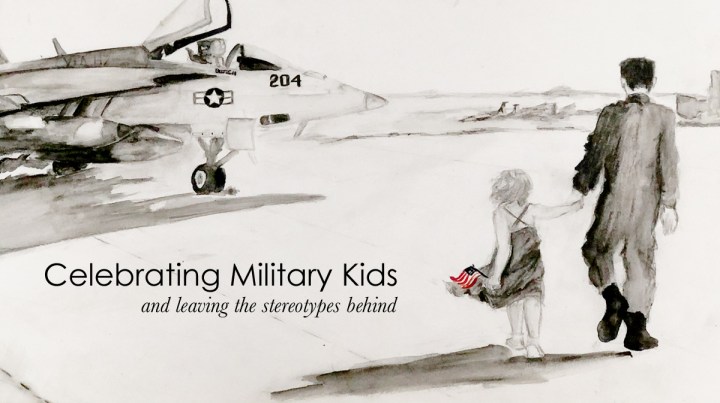
Celebrating Military Kids and Leaving the Stereotypes Behind

Celebrating Military Kids and Leaving the Stereotypes Behind

Each year, April is acknowledged as the Month of the Military Child and my heart immediately opens wide to celebrate this amazing segment of our population. Statistics say that almost one million kids live within the military community and their resiliency and perseverance inspire me. But I didn’t always feel that way.

As I’ve mentioned in earlier blogs, I jumped into this military community with zero information and I didn’t even care. After dating my husband long-distance for four years, he could have told he was moving to Mars and I would have said “I’m coming with you!!” But admittedly, as I entered the military world I held to false stereotypes and negative assumptions of the kids around me, mostly because their lifestyles were so foreign to my own childhood experience. 

I assumed the military life must (obviously) be too difficult for a child. Moving houses and cities? Forced to leave friends? Being the new kids at school? HORRIBLE!! I assumed that by the time our future children were in school, we would need to quit this Navy thing and return to our hometowns to give them a “normal” childhood, like the ones gifted to my husband and me. I assumed this life would be nothing but hardship and heartbreak and no one dreams of burdening innocent children with such things.   

But then I started noticing the military kids around me, especially the teenagers. I started noticing that they were happy, well-rounded, confident kids. I noticed that they had very close relationships with their families, special bonds with their military friends and ways of looking at the world that were different than I thought. (Sure, there were kids who struggled but was it more than the civilian world? Not noticeably.) My heart began to slowly expand…

“Maybe the military might not ruin them…”

“Maybe we could do this a little bit longer if our kids seem okay…”

“Maybe the military might allow them to…thrive?”

MIND BLOWN. Is it even possible, I thought? To spend twenty years moving your kids around and have them still be functional beings? I watched even more closely. We moved to Europe and I saw kids learning to speak different languages, befriending kids from other nations and adapting to the personalities of different adults and cultures. Some kids had bounced from country to country, spending ten years abroad and accumulating a lifetime of experiences that many American adults never acquire. Back in the U.S., I saw kids bouncing from coast to coast and adapting to a wide array of situations. I saw kids move from the city and adapt to small town life. I saw kids from the countryside move to Washington DC and adapt to noise and traffic and fast-paced expectations. Military kids have lived east, west, north and south and are able to account for American culture in very mature, intelligent ways.

I have seen kids walk confidently into new schools, conquer the first dreadful day, find friends and prove to themselves that they can do difficult things. (Such an experience would have probably emotionally unhinged me as a child.) I marvel at the confidence of my own children who have moved many times and developed unique social skills and subtle resiliency that I wasn’t forced to learn until I was an adult, moving away from my hometown for the very first time. As my oldest looks towards college I see a fearless soul who can intelligently debate east and west coasts, who knows that family is always just a plane ride away, and who knows that the world is her oyster and she is untethered and free to go where she chooses. Because she has already gone so many places before.

Now please listen to me… I don’t mean to paint an overly rosy picture of this military life and gloss over the immense challenges. Do some military kids suffer from anxiety and depression? Yes. Do some military kids find the lifestyle difficult to navigate? Of course (as do many adults). Do some families decide that the military is causing too much stress for their children? Absolutely. There are times when the government simply asks too much of these young people and families must pivot. I’ve seen and heard of brilliant military members exit the community at the pinnacle of their careers to prioritize their children’s needs. I stand and applaud these parents! 

I’ve seen children parted from a parent for a solid year and the world seemed upside down, wrong and unnatural. I’ve seen Navy families deploy three times in three years. My own household has seen its fair share of excruciating goodbyes and we know more tears loom in our future. But when all is said and done, I refuse to accept the stereotype that all military children are struggling beyond their emotional capabilities. It’s just not what I’ve witnessed. I’ve seen too many success stories to stamp military kids with that label!

What contributes to the success of these special people? I’ve thought about it over the years and the answer is obviously unique to each family. But I would offer one idea here: the formation of character, forged through trial and fire. We Gen X-ers are often accused of coddling our children and it’s difficult to deny (*cough, cough* participation trophies). We desire to produce character and perseverance in our kids but we have fallen prey to the narrative that discomfort is bad and happiness is always good. We move mountains to protect our children from challenging situations but then wonder why they don’t exhibit confidence. We take away the opportunities for emotional growth but then wonder why they are immature. 

The truth is that some characteristics cannot be academically taught, but must be organically grown and experienced- like resiliency, bravery, perseverance and fortitude. Military children grow in character every day as they face the smaller and larger challenges confronting them. Navigating through friendships, change, discomfort and sacrifice forces them to dig deep, plant strong emotional roots and ground themselves in ways beyond their years. I’ve seen it again and again. They have climbed mountains, conquered the steep terrain (even if they fell down a few times) and proven that they are overcomers. And that’s why my heart will be forever touched by this population. ❤️

So as we celebrate the Month of the Military Child, let’s take a minute to honor these special kids who serve our nation in such a unique way. Let’s give them a loud round of applause because I think we can all agree that THEY DESERVE IT. 🙌 🙌 🙌 🇺🇸

The Heartache of Moving and the pieces of us we leave behind

The Heartache of Moving and the pieces of us we leave behind

[Note: These thoughts were written prior to COVID-19 which makes the heartbreak of a move even worse. Many of us have been robbed of the chance to say proper goodbyes, to thank our teachers and coaches, to hug our friends and visit our favorite haunts. We are cutting the strings without having the chance to tie them in tidy bows before we depart. Moving without that kind of closure is a psychological and emotional challenge for adults and kids alike. My family is already reeling from the disappointment. Surely it will become part of our story as we reflect on 2020 and the ways COVID-19 disassembled our lives. Godspeed to all of us as we navigate this upcoming PCS season.]

• • • • • • • • • • • • • •

“I’ve put down a lot of little roots these two years,” Anne told the moon, “and when I’m pulled up they’re going to hurt a great deal.” – Anne of Green Gables/Avonlea

My husband and I have PCS-ed many times with the Navy. That’s military- speak for packing our Earthly belongings and moving to a new base. A Permanent Change of Station contrasts with Temporary Duty- TDY- a shorter separation from where you reside. Yet any military family can see the irony in the names. 🙂 We understand the need to differentiate the two statuses but truthfully we know we will never have a permanent station until we actually end our military service. And therein lies the challenge.

If I have learned anything in these moves, it is that we need to approach each PCS with expectation and not be afraid to pursue a new life. Our QUALITY of life depends on it, even if we know that ultimately our situation is not permanent.

When we drive into a new town, we try to jump into community as quick as possible for the sake of our kids and our family. We survey the ground, find our special spot, dig down deep and plant our roots. Military spouses like to say “Bloom where you are planted!” but the first step is CHOOSING to plant ourselves. Flowers cannot bloom without their roots attached… and people cannot thrive without community. So we take the plunge.

Like a plant finding life-giving minerals in the ground, we wrap ourselves around that which sustains us- people and places and experiences. We spread our thirsty vines across the city and create a new normal, knowing in the back of our minds that it will not last forever. Someday this tour will also end, but we need water immediately and extend our roots just a little further.

We introduce ourselves and meet new friends.

We find a church and community that feeds our soul.

We land jobs that we love.

We bond with our kids’ schools and community and sports teams. (We cheer for joy when we find cool kids with cool parents!)

We watch our children learn to walk in our “new” old house. We nurse them when they are sick and celebrate birthdays within those sturdy walls.

We learn the aisles of the grocery stores and the backroads around our neighborhood.

We spend hours strolling in the woods near our house.

If we are lucky, we have two years, maybe three years of the new normal. If we are unlucky it is less. But just when our lives seem full and settled, the government greets us with news shaped like an hourglass. What?? Already?? It’s time? Another PCS looms ahead, another impermanent change of station has been added to the calendar and in one sentence our world shifts…again.

Immediately half of our thoughts belong to another town. Do I know anyone who has lived there? Are the schools good? What about the rental market? Hand me my phone, I need to look at Zillow.

The sand begins to fall, the countdown begins and we act differently. Don’t fill the freezer with anything else! Don’t buy any candles, alcohol, Costco toilet paper or condiments! (For goodness’ sake, don’t buy any Worcestershire sauce because it takes two years to use that stuff.) We don’t subscribe to any new magazines. We ditch the summer camp flyers and school announcements for next year’s programs; none of that matters anymore. How on Earth do I transfer my kid’s school credits?? Hand me my phone again.

We clear away the superficial but eventually, the shift becomes more personal… and more difficult. We take a deep breath, stare down at the roots we so lovingly planted and nourished, and start to pull them up.

We pull ourselves out of the running for long-term projects. Maybe we could have earned a promotion at work but now we are leaving.

We pull ourselves back from new friends. We don’t have the time or emotional energy to invest in new people. It’s too late.

We pull ourselves back from our homes which we never finished decorating.

We pull ourselves away from the world, sometimes burrowing within our houses to cover our emotions and avoid the onslought of approaching goodbyes. Our hearts begin to ache.

The problem is that our hearts are now entangled in this new life and if you have ever tried to pull a plant out of the ground, you know there’s a certain ripping that occurs. We can handle the roots delicately and sweep away the surrounding, unattached dirt, but the tearing still happens when we aim to fully remove roots from their home.

We watch our kids hug their friends goodbye and shed their own tears and we think Are we ruining their lives??  We start saying goodbye to our own friends and silently think Will we ever see them again??  It hurts.

We sit in our empty house, listening to the echoes of footsteps. Is this really the end?  We close the door, hand the keys over to our landlord and start weeping in the driveway because Will we ever return to this house again??  Oh man, it hurts.

During the long walk to goodbye, we shed tears and feel broken-hearted because WE ARE. We are tearing away parts of our heart and leaving them with that person or place forever. It’s a painful process.

NOW STOP. Before we cry ourselves to sleep or eat a gallon of ice cream at the mere thought of relocating, let me tell you this: I’ve learned to see blessings in it all. Stepping back and seeing the bigger picture gives us a beautiful vantage point.

Even though the uprooting hurts, the pain is a blessing because it tells us that our heart and roots bonded with something or someone. Ripping ourselves away never feels good, but that doesn’t mean it is NOT good. We are meant for connection and the heartache is evidence of our success.

The heartache is also a blessing as it explodes into fragments our simple definition of “home”. If “home is where the heart is” then this nomadic lifestyle (and subsequent heartbreak) allows us to experience this idea in special ways.

The town that sheltered my broken soul as I recovered from a miscarriage and the death of a loved one, warranted giant tears when I departed. In a short time I had planted myself deeply. To this day, glancing over a map, my eyes will rest on that town because part of my heart never left. Although I will shall never reside there again, it will always feel like “home”.

Or the house on another continent that became our safehouse, our place of comfort and the scene of tremendous growth in our children. So much of my heart was left within those walls that I felt physically “homesick” for months after our PCS was complete. (I still do!) It will forever remain special.

Or the friends that we meet during a tour- the ones who become our confidants and kindred spirits… those goodbyes are painful, but as we share bits of our heart with those people we will be rewarded with great joy when our roads converge again. Even people can feel like “home”.

Whether we desire it or not, this nomadic lifestyle changes and moves us. We experience new things, new friendships and new cultures that cannot be unlearned. Even if we hate where we live, we are still changed! Our hearts are the parts that change the most- growing, expanding and reshaping after we leave bits of them behind. So while the molding and shaping can be painful sometimes, I’ve concluded that it is ultimately VERY GOOD.

At the end of the day I believe the pain is worth it. The friendships and experiences under my belt are priceless to me, even with the accompanying heartache. How lucky am I to feel homesick for so many people and so many places?

If you are moving soon and wondering if you have the energy to create another new normal, I say: don’t wait until you are withered and dry. Dig in and plant those roots as soon as possible, even if you must pull them up later. Give your heart to new friends, even if you know there will be a goodbye in your future. Feel free to spend a little time mourning over your last duty station, but don’t let the tears blind you to the riches of your new town. These miles of new soil will bring different opportunities and different experiences so go ahead and survey the ground until you find your special spot. Then plant yourself.

“[Anne] was leaving the home that was so dear to her, and something told her she was leaving it forever… things would never be the same again. And oh, how dear and beloved everything was… all the thousand and one spots where memories bided. Could she ever really be happy anywhere else?” – Anne of the Island

Yes… she could. And she was. And so will you and I. ❤️

Quirky Military Homes and the Reasons I Love Them

Quirky Military Homes and the Reasons I Love Them

My family has moved many times in the last twenty years, in the country and out, from base to base to base. There is an unbeatable camaraderie among military families, for a plethora of reasons, but I find the laughter (and frustration) over our homes to be a special connection. Living transitory lives in different places yields a certain attitude about houses and a funny quirkiness in our spaces that entertains me. Our homes tell an eclectic, sometimes humorous story and represent so many aspects of the military life.

Here are TEN REASONS I LOVE MILITARY HOMES:

1) Lifestyle constraints make us low-maintenance. While normal families might spend months finding the perfect house, military families must be quick to find shelter and beggars can’t be choosers. We are moving in six weeks?? Alrighty… A house on base that looks exactly like every other house on the block? Okay. A rental house across the country that we must reserve, site-unseen, because the market moves so quickly? And it has a granny bathtub and a kitchen the size of a dollhouse? That’s fine. Or moving to a small town and finding only ten houses for sale within the school boundaries, none of which were the kind of house we had in mind? Okay, I guess this one will do. And since we might only be there for two years, we focus on the small things, ignore the big things (like the bright yellow hallway tile we want to jackhammer) and accept our imperfect houses until we fly away to our next nest.

2) Military homes keep us humble. In a world of dream homes, HGTV, and the need to keep up with the Jones’, many military families grab a bag of popcorn and watch from the sidelines. Our houses are often not worth bragging about (see above) but exist for practical purposes. They do the job, they give us shelter, they provide a temporary space for our family and we make them work. If your house has a toilet 12” from the front of the washing machine (a scenario which takes multi-tasking to an ENTIRELY new level) you can’t feel too haughty #truestory. If your downstairs doesn’t have any heating vents or your kitchen has only four cabinets or two microwaves installed next to each other, you aren’t calling “House Beautiful” and asking for a magazine spread. You are calling your friends and saying “My new house has lime green walls. It’s fine, my kid will sleep there.”

3) Furniture is often eclectic and tells a story. Those who have been stationed in Europe usually have large antiques, often filled with Polish Pottery. (I miss you, Trocs.) People who have been stationed in Japan often have Tansu Chests against their wall, showcasing their souvenirs from East Asia.

Sadly, many of these pieces have battle scars from the moving process- broken table legs forced back together with superglue or large scratches across the surface from when Joe the Mover decided to place the lawn mower on top. (Way to go, man.) Normal people might replace their flawed furniture but military families think of future moves and future damage, place a tablecloth over the top and tell their friends “This is why we can’t have nice things.”

4) Furniture often doesn’t fit right. While normal families choose the perfect sofa for the perfect living room, we shoot in the dark, hoping that what we buy will be transferrable in two years. It’s all a gamble! When we downsize from a 4,000 sq ft Texas mansion to a 1600 sq ft home in Washington DC, we will curse our large sectionals that now fill every inch of space in our tiny living room. But…we paid MONEY for that big sofa and we aren’t divorcing it quite yet. It will do.

Sometimes our furniture has to go suddenly, like when my friend moved to England and couldn’t get her King size mattress in the front door! Oops. New mattress please!

5) Furniture is often repurposed. When spaces change, so do the lives of our possessions. My friends’ nightstands, which are too wide for her new bedroom, now reside next to her front door as side tables. My other friend’s kitchen buffet table now sits in her living room. The file cabinet that matches the office desk sometimes doubles as a TV stand. The rug I purchased for my front entry now lives in my master bedroom because our new house doesn’t have space by the front door. (Does it match my bedroom linens? Nope. But someday I might have a foyer again so the rug stays.)

6) Home decor often goes through a lengthy consideration process. Normal families see an item they like and buy it. Done. Shopping is not that simple for us. We see something at a store and think Do I have a place for that? Is it likely that I would have a place for it in another house? What are the chances that it will survive our next move? Is it too fragile? How would movers actually load that onto a truck? If I buy a glass coffee table, will it be destroyed within two years? Wood it is. Sometimes we buy things we love (like the couches mentioned above) and deal with the spaces as they come. Sometimes we win and sometimes… well… we live tightly.

7) Sometimes we look like hoarders. That 4,000 sq ft mansion reduced to 1600 sq ft might mean a mountain of possessions inside our walls. When we move to a house that suddenly has zero closets and no garage, the bikes might live in the dining room. Or we may live in the desert but fill our closets with bins of snowgear in case our next duty station has cold winters (because that stuff is an INVESTMENT). We might have one room with three mismatched couches or European antiques shoved in the corner of our children’s bedrooms #truestoryagain. With unclear futures and unknown spaces ahead of us, hoarding can easily happen.

8) Unexpected souvenirs abound everywhere. We hail from all corners of America and have lived in a variety of places so our decorating style can be random but special. My Georgian friend lives in Virginia but has a Washington State highway sign on her wall. My Louisiana-born friend has a collection of Japanese souvenirs on her shelf. Another friend of mine has a couch full of British pillows. My living room displays a random black elephant from Hong Kong sitting next to a photo of the Pacific Northwest. That’s how we roll- converging our home states with our places of residence and our worldly souvenirs.

9) Military houses help design future dreams. Every house teaches us a lesson and adds mental bricks to our “forever homes”, those castles in the sky which military families so often reference. We dream of a future home of our choosing, in which we finally have control over our space and the location. Our forever houses will have this… we always say in conversation. One house taught us that white tile always looks dirty. Other houses have taught us that front porches prevent soggy packages, black countertops show crumbs, fewer bathrooms mean fewer spaces to clean, and again, let’s not put a toilet next to the washing machine. Essentially, military families have the opportunity to test-drive different shapes and sizes of houses and fine-tune our future abodes. It is an unexpected gift of this nomadic life!

And what I love MOST about military homes is…

10) They represent the essence of our military journey. We are a collection of memories and battle scars. We load ourselves into trucks and transport ourselves across the country (or the ocean) to serve where we are needed. We smash ourselves into corners, cover our wounds and look out the window at the new scenery. We reinvent ourselves every time, putting forth new energy into our new purpose. We might not look pretty, we might not fit exactly into our new space but we awkwardly try. With every move we look a little more worn (and maybe a little more quirky) but don’t let the outside fool you. We are STRONG, STURDY and ABLE to get the job done. 🙂

To all the military families who are moving this year: may the force be with you, may the movers be gentle with your furniture and may your new nest have neutral paint colors and normal toilets. Godspeed.

Has your military family lived in a quirky home? I would love to hear your stories! ❤️

Don’t forget to subscribe if you would like to receive future posts in your inbox.